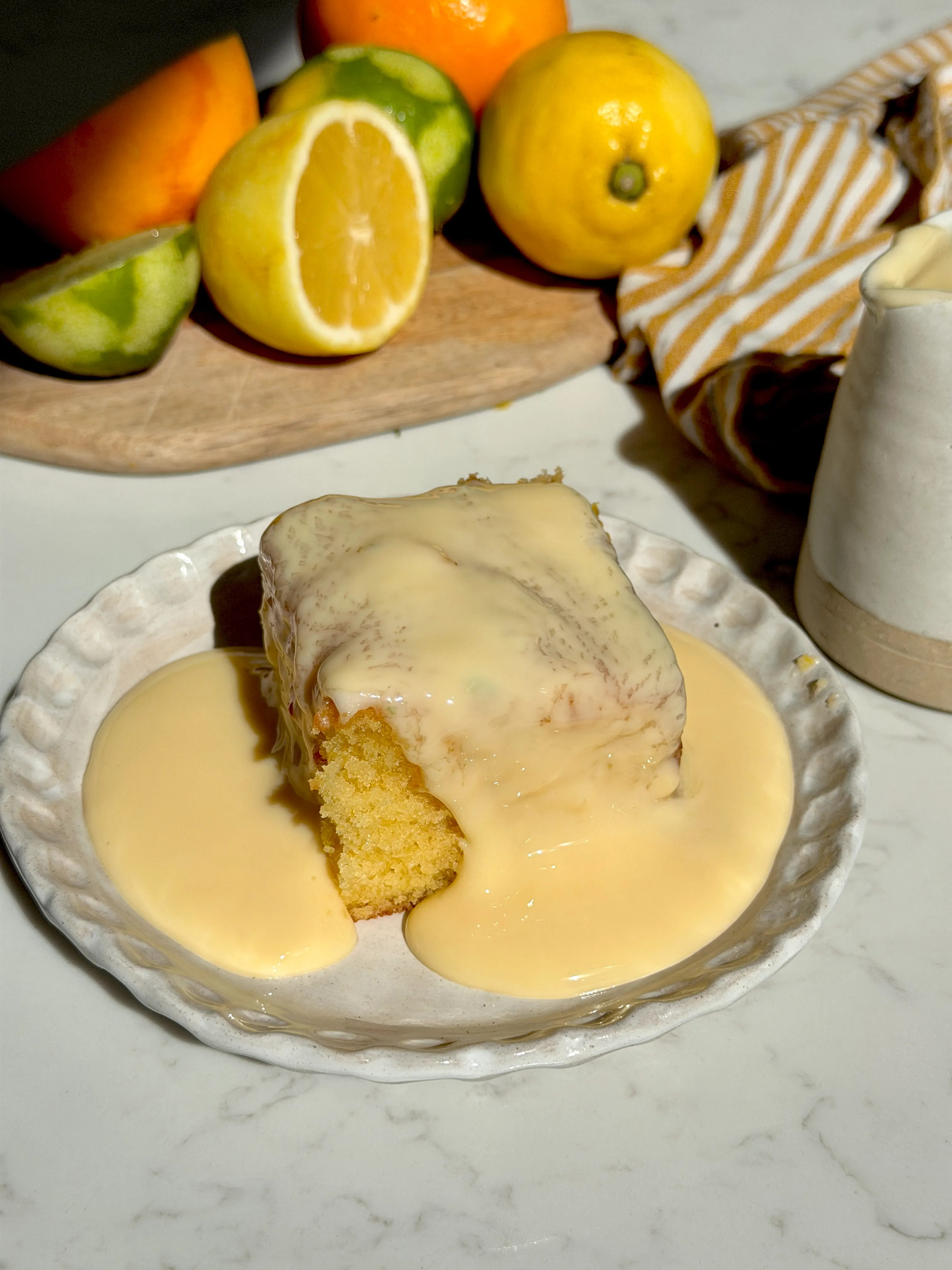
Citrus School Cake
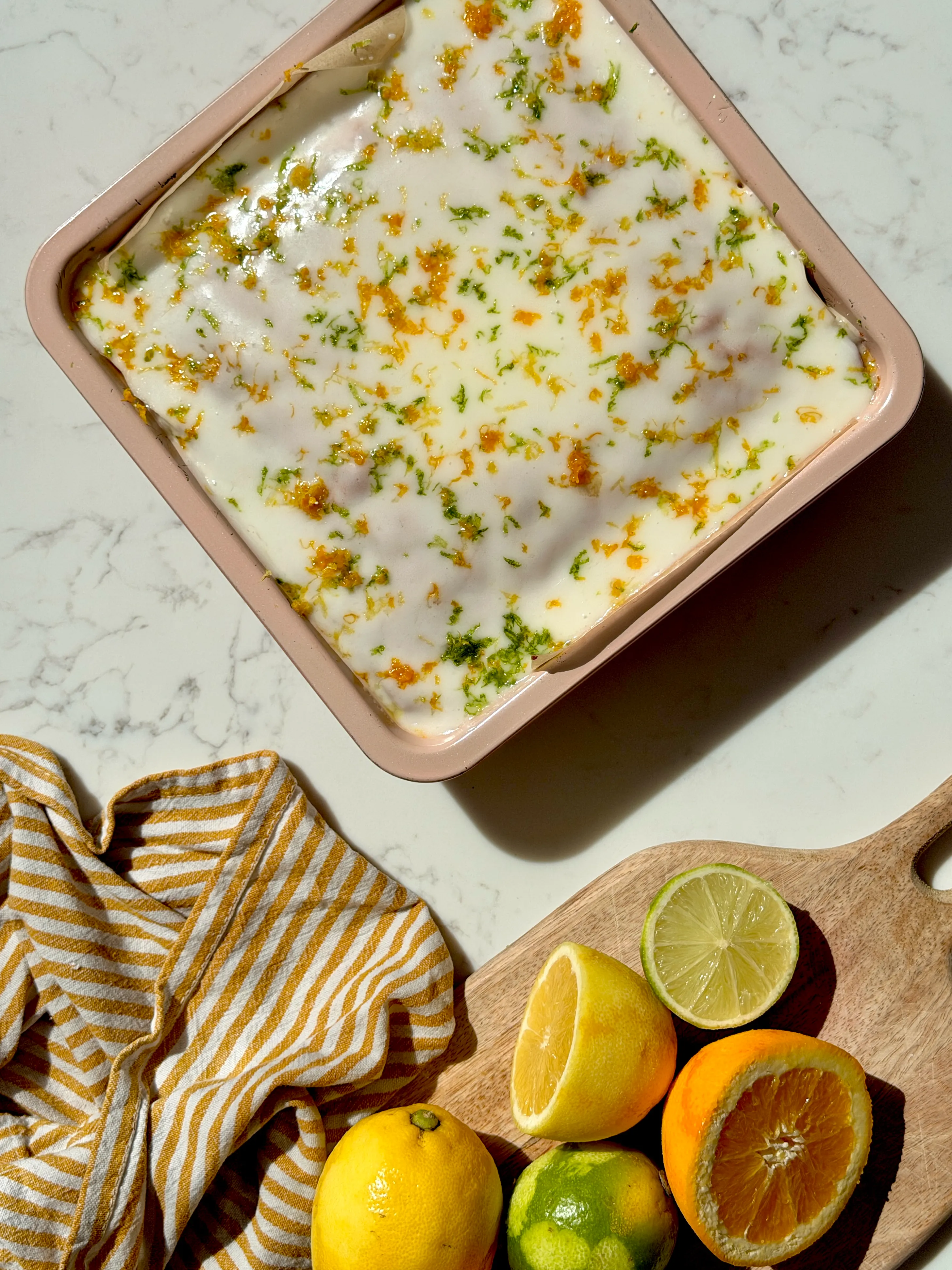
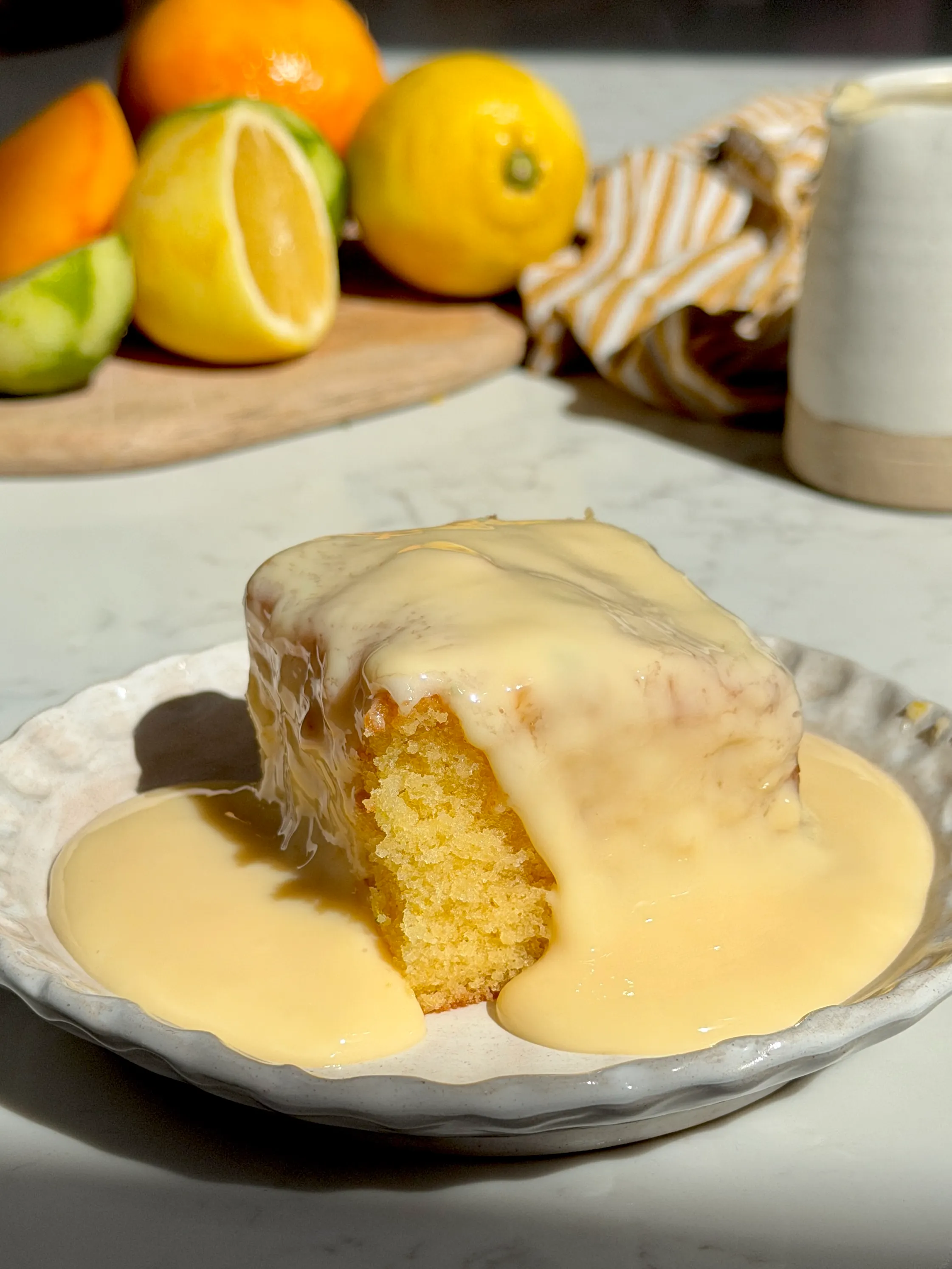
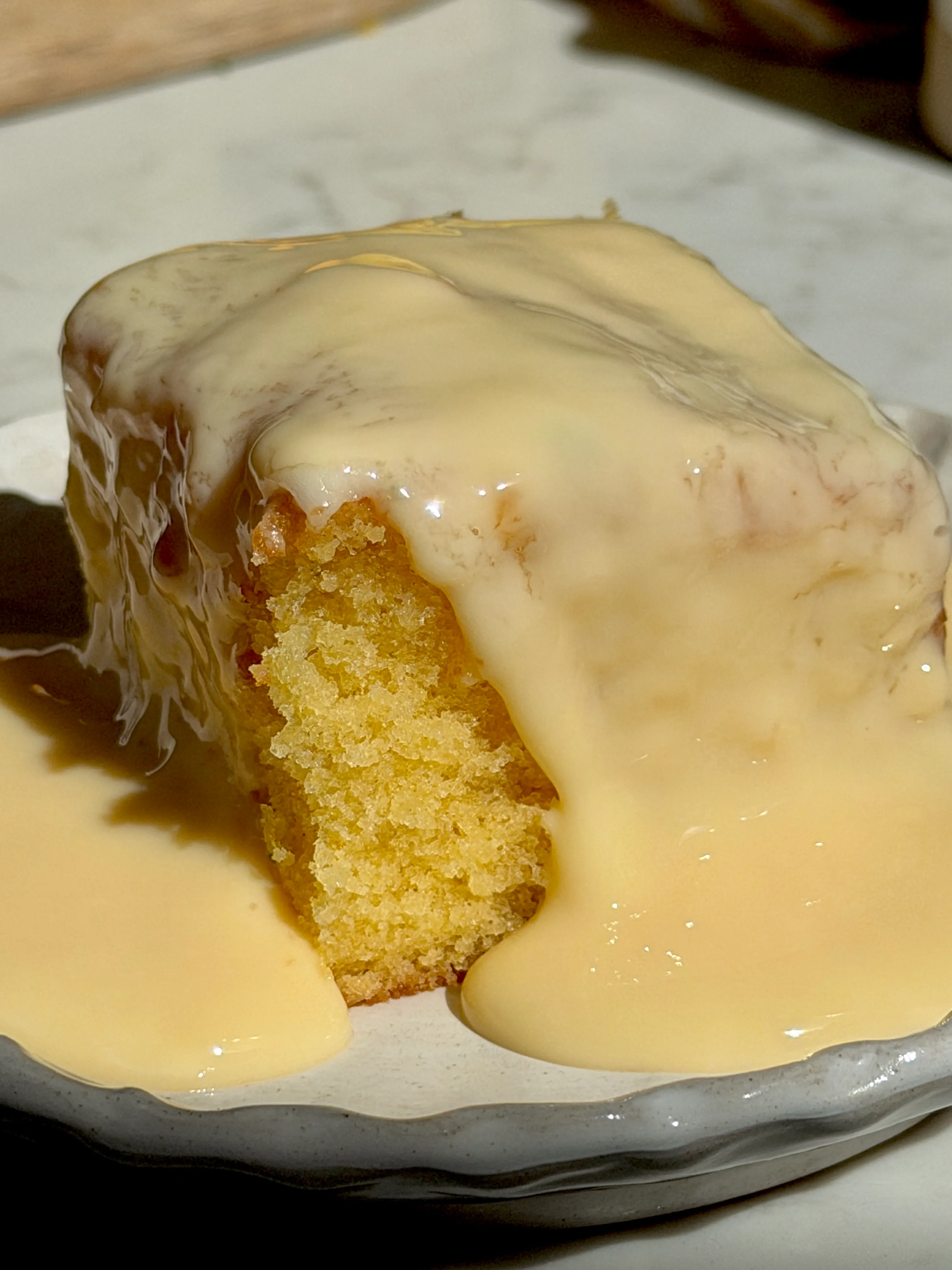
I just returned from a road trip around Scotland and while I was there I had one of the best slices of cake I’ve ever had. A simple, single-layer orange, lemon and lime cake, topped with a citrusy water icing. I told my friends that it was as close as I could get to my ideal cake and they were shocked. I think because it was so simple. But honestly that’s the beauty of it, to me. There’s a nostalgia that comes with a single layer cake, I think harking back to a time before social media where bakes didn’t have to be extravagant in order to get recognition and a good lemon drizzle, which is objectively the best cake out there, was the peak of perfect baking. And of course, a nostalgia from the iconic British dessert that is school cake. A single layer, vanilla sponge, topped with water icing and sprinkles and, if you’re anything like me, finished with hot custard, so the icing and sprinkles melt into the custard as you eat it. So I’ve combined the two, creating a citrus school cake with custard, the perfect nostalgic September bake. Rather than traditional sprinkles I opted for extra citrus zest which gives a similar look and adds extra flavour, but you could happily to the traditional sprinkle topping.
Hello readers! I'm Eleanor..

If you like this recipe, make sure to follow me on my socials for more!
More like this


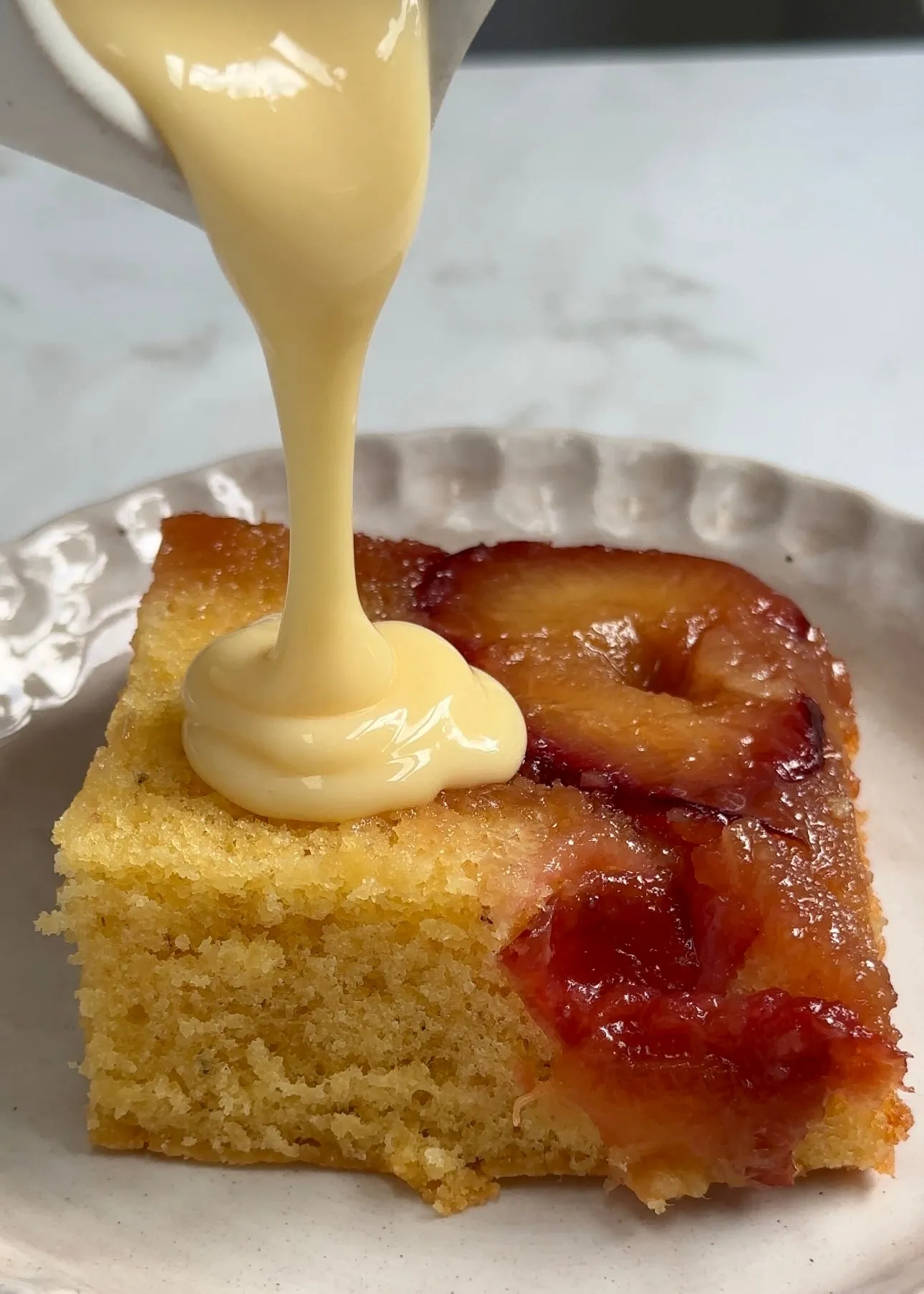
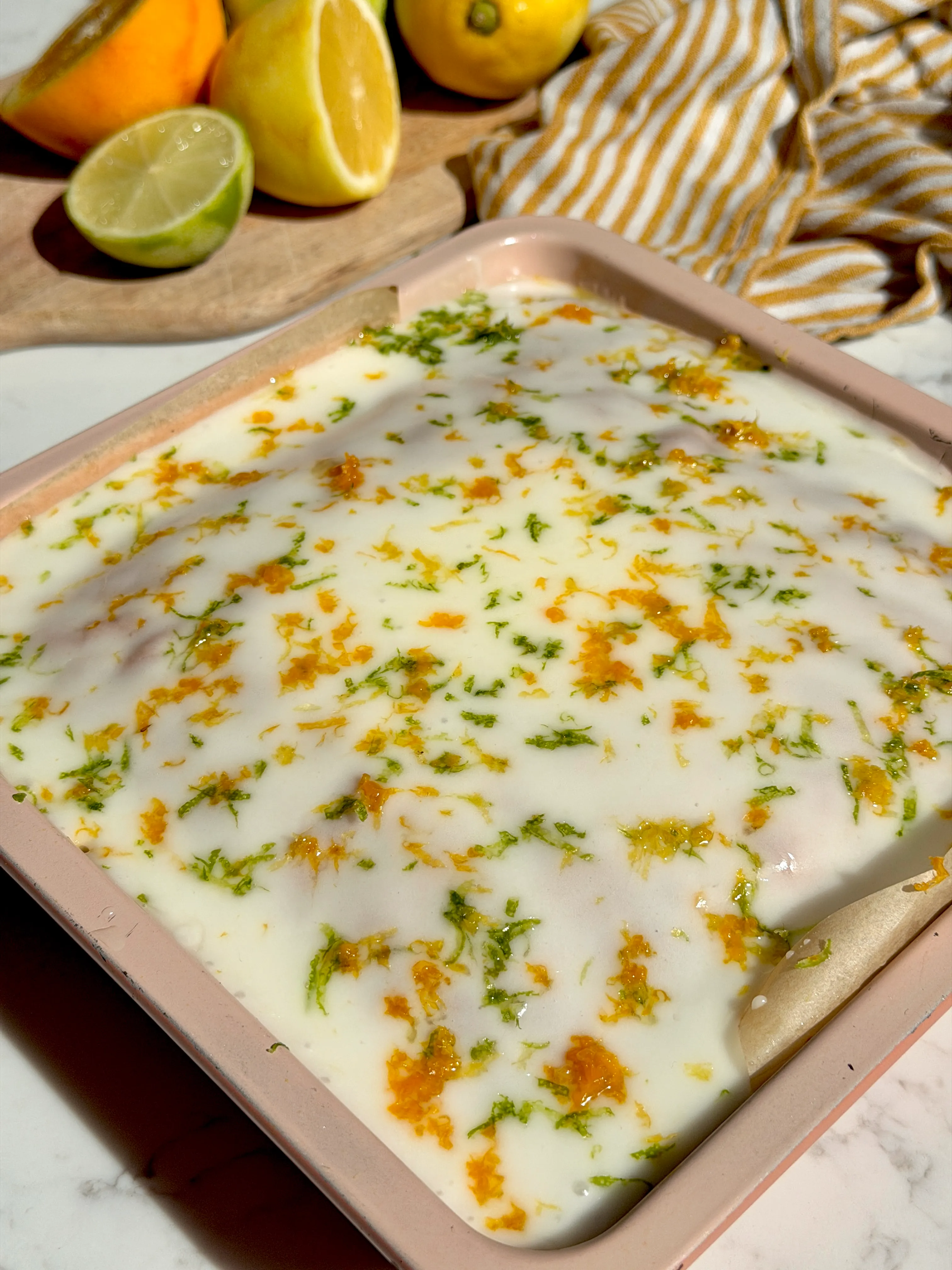
This citrus school cake is a single layer traybake sponge that makes nine generous slices — a light, fragrant orange, lemon and lime cake topped with a citrusy water icing and finished with extra citrus zest or sprinkles. The sponge is built on the classic equal-weight method, using 160-200g each of caster sugar (superfine sugar), butter, eggs and self-raising flour, with the citrus zest worked into the sugar before creaming to draw out the oils and maximise the flavour. The icing is poured over while the cake is still ever so slightly warm, which helps it spread smoothly and traps a little moisture in the sponge beneath. It is best served in generous slices with a pour of warm custard — the icing softens and the zest melts into the custard as you eat it, and the whole thing is as close to a perfect slice of cake as I know how to describe.
Why I Created This Recipe
There is a nostalgia that comes with a single layer cake, I think harking back to a time before social media, when bakes did not have to be extravagant to get recognition, and a good lemon drizzle, which is objectively the best cake out there, was the peak of perfect baking. And then there is the other nostalgia: the iconic British school cake. A single layer vanilla sponge, topped with water icing and sprinkles, finished, if you are anything like me, with hot custard poured generously over the top, so the icing and sprinkles melt into it as you eat. It is one of the great simple pleasures of British school dinner culture, and it has stayed with me ever since.
So I combined the two. A citrus school cake, the fragrant, zesty sponge from that Scottish café, the format and spirit of school cake, and the mandatory warm custard alongside. The perfect nostalgic September bake, and one I think you are going to love.
What Is School Cake?
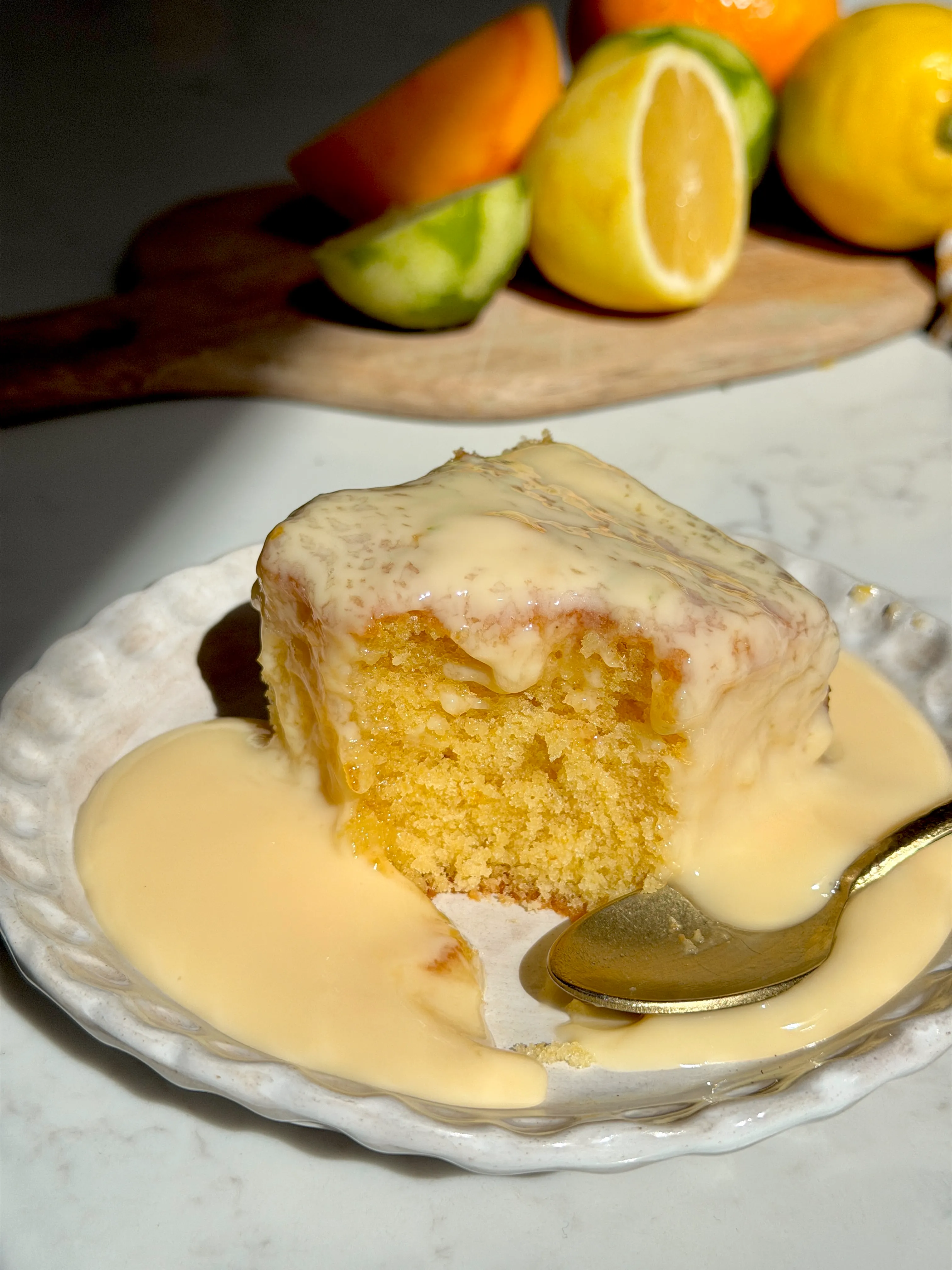
School cake is one of the great British institutional puddings — a simple, unfussy traybake sponge served in canteens and school dining halls across the UK, typically topped with a thin layer of water icing in pink or white and finished with hundreds and thousands sprinkles. It was served in squares or rectangles, sometimes warm, and almost always alongside a pour of custard that turned the icing slightly melty and the sprinkles soft and sweet.
It is not a complicated cake. The appeal of school cake is not technical achievement — it is nostalgia, simplicity and the particular comfort of something unpretentious that tastes exactly like it should. A generation of British people grew up eating it, and the combination of soft sponge, sweet icing and warm custard is one of those flavour memories that stays with you long after school dinners are a distant memory.
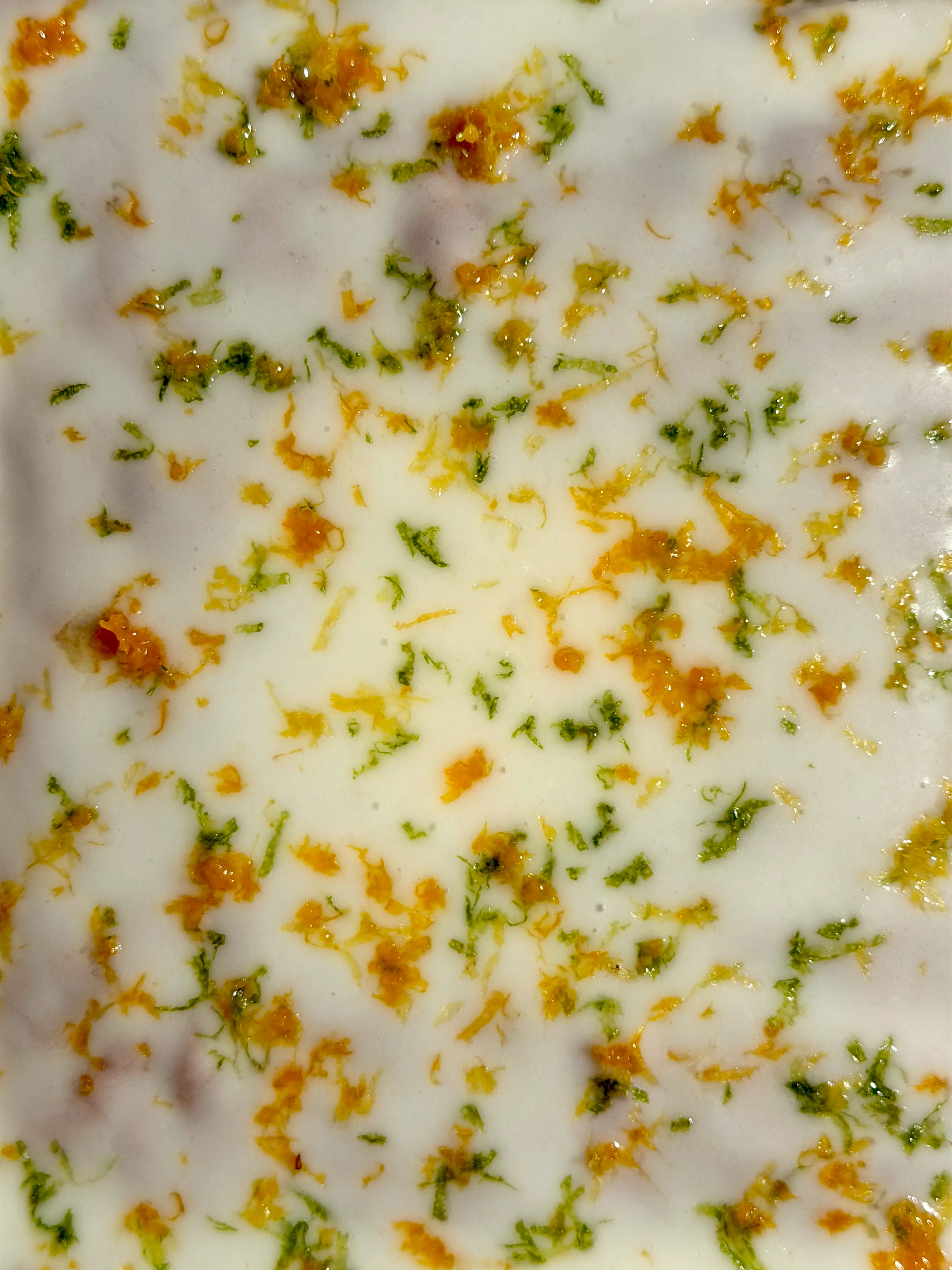
This citrus version keeps everything that makes school cake what it is — the single layer, the water icing, the sprinkles — and updates it with the bright, fragrant flavour of orange, lemon and lime, swapping the traditional plain vanilla sponge for something with a little more personality. The extra citrus zest on top gives a similar look to the sprinkles while adding flavour rather than just colour, though traditional sprinkles are an equally valid and deeply nostalgic choice.
The Equal Weight Method — Why This Recipe Works
This sponge is built on one of the most reliable and useful principles in British baking: the equal weight method. The four main ingredients — caster sugar (superfine sugar), butter, eggs and self-raising flour — are all used in exactly the same quantity by weight: 160g-200g each. This is the same principle behind a classic Victoria sponge, and it is a ratio worth knowing by heart because it works every time and scales infinitely.
Start by weighing your eggs in their shells. The total weight of the eggs will be the weight of butter, sugar and flour you use. So if your eggs weigh 160g you will use 160g each of butter, caster sugar and self-raising flour.
The equal weight method works because each ingredient plays a specific and complementary role, and the balance between them is what gives the finished cake its texture. The butter and sugar cream together to incorporate air and give the cake its lift and tenderness; the eggs bind everything together and add richness; the flour provides the structure. When all four are in equal proportion, the result is a sponge that is consistently light, moist and well-risen — never too dense, never too dry.
The Citrus Zest Technique
The step of mixing the citrus zest into the caster sugar (superfine sugar) before creaming with the butter is not decorative — it is one of the most effective ways to maximise the citrus flavour in the finished cake, and it is worth understanding why.
Citrus zest contains aromatic essential oils in the tiny cells of the peel — these oils are where almost all of the fragrance and flavour of citrus fruit lives. When zest is mixed directly into a batter, these oils remain largely trapped inside the zest cells and do not distribute as evenly or as potently as they could. When the zest is mixed with sugar and worked together for a couple of minutes first, the sugar crystals physically break down the cells in the zest and release the essential oils, which are immediately absorbed into the sugar. The result is a citrus-infused sugar that distributes the flavour far more evenly through the entire batter than plain zest would — and a noticeably more fragrant, more intensely citrusy finished cake.
It takes two minutes and makes a significant difference. Do not skip it.
Why You'll Want to Make This Recipe
A School Cake, But Better
All the nostalgia and simplicity of a classic British school cake — single layer, water icing, warm custard — with the bright, fragrant flavour of three citrus fruits. It is the kind of cake that makes you feel immediately at home and tastes genuinely special at the same time.
Simple Traybake Cake
This is a one-bowl, one-tin bake that requires no layering, no buttercream, no decoration beyond a pour of icing and a scatter of zest. The equal weight method means the quantities are easy to remember and the result is consistently excellent. Simple traybake baking at its very best.
The Mandatory Custard
Warm custard poured over a slice of this cake — the icing softening, the zest melting into the custard, the sponge absorbing the warmth — is one of the great simple pleasures. Try it with the homemade vanilla custard from the Small Batch Bakes series for the best possible result, or a good quality shop-bought custard if you want something quicker.
Makes Nine Generous Slices
A 9x9 inch tin gives nine generous slices — enough for a week of puddings, a gathering of friends or a cake that gets better over the first couple of days as the flavours develop and the icing settles into the top of the sponge.
My Top Tips for the Perfect Citrus School Cake
- Mix the citrus zest into the caster sugar (superfine sugar) for a full two minutes before adding anything else. The sugar should smell intensely citrusy and look slightly damp — this tells you the essential oils have been released and absorbed. This step is what makes this cake taste as vibrant and fragrant as it does.
- Make sure the butter is at room temperature before creaming. Cold butter will not cream properly with the sugar and will give a dense, heavy cake rather than the light, fluffy sponge you want. Remove it from the fridge at least an hour before you start.
- Cream the butter and sugar for the full four to five minutes on a high speed. The mixture should be very pale — almost white — and noticeably fluffy before the eggs go in. This stage is where most of the air is incorporated into the batter, which is what gives the cake its rise and its tender crumb. Do not rush it.
- Add the eggs, flour, milk and vanilla together in one go rather than alternating. At this scale and with self-raising flour, adding everything together and beating briefly gives a consistent, well-combined batter without the risk of over-mixing.
- Do not over-mix once the flour goes in. Two minutes on a medium speed is enough to bring the batter together — over-mixing develops gluten and can make the finished cake dense and slightly tough. Stop as soon as the batter looks smooth and well combined.
- Use a skewer or a thin knife to test for doneness. Insert it into the centre of the cake — it should come out completely clean, with no wet batter attached. A few moist crumbs are fine; wet batter means it needs longer.
- Pour the icing while the cake is still ever so slightly warm — not hot, but not completely cold. A slightly warm cake helps the icing spread smoothly and flow into the corners of the tin naturally, and it traps a little of the cake's moisture beneath the icing layer as it sets, which keeps the sponge beautifully moist.
- Adjust the icing consistency carefully before pouring. It should be thick enough to hold on the surface of the cake without running off the sides, but thin enough to pour and spread easily — roughly the consistency of thick double cream (heavy cream). Add citrus juice a teaspoon at a time if it is too thick; a spoonful of icing sugar if it is too thin.
- Scatter the extra citrus zest or sprinkles immediately after pouring the icing, before it sets. Once the icing has set it will be too firm for the toppings to stick.
- Leave the icing to set fully before cutting. This takes around 20–30 minutes at room temperature — cutting too early will drag the icing and give untidy slices. Use a sharp knife and a single, confident downward motion for the cleanest cuts.
- Serve with warm custard — always. The icing softens slightly as the custard hits it and the whole thing becomes greater than the sum of its parts.
Storage
Storing
Once the icing has set, store the cake covered at room temperature for up to three days — a cake tin or an airtight container is ideal. The cake is excellent on the day it is made but genuinely improves over the first day or two as the icing settles into the sponge and the citrus flavour deepens and mellows.
Freezing
The sponge freezes well without the icing — wrap tightly in cling film (plastic wrap) and freeze for up to three months. Defrost at room temperature, make fresh icing and top once the sponge has fully defrosted. The iced cake is not ideal for freezing as the water icing can become sticky and weep on defrosting.
Dietary Variations
Gluten-Free
Replace the self-raising flour with a gluten-free self-raising flour blend — most supermarkets now stock one specifically formulated for baking. The texture will be very slightly different but the equal-weight method gives enough structure that the result is consistently good.
Dairy-Free
Replace the butter with a good quality dairy-free block butter — one with a similar fat content to dairy butter rather than a low-fat spread — and swap the milk for an unsweetened plant milk. The cake will work in the same way and give a very similar result.
Different Citrus Combinations
The orange, lemon and lime combination is what gives this cake its particular brightness and complexity, but the recipe is very forgiving of substitutions. All lemon gives a classic lemon drizzle-style flavour; all orange gives something warmer and more rounded; grapefruit in place of the orange adds a slightly bitter, more sophisticated edge. Use the same total quantity of zest and juice regardless of which citrus you choose.
Adding a Drizzle
For a more intensely citrusy result, brush the warm cake with a simple citrus drizzle — mix the juice of half a lemon with two tablespoons of caster sugar (superfine sugar) and brush over the warm sponge before adding the icing. This soaks into the cake and gives a sharper, more pronounced citrus flavour in every bite.
Frequently Asked Questions
What is school cake?
School cake is a classic British traybake pudding served in school canteens and dining halls across the UK — a simple, single-layer vanilla sponge topped with a thin water icing, usually pink or white, and finished with hundreds and thousands sprinkles. It was almost always served with warm custard, which melted the icing and softened the sprinkles as it was poured over. It is one of the most nostalgic British puddings for anyone who grew up eating school dinners.
Why do you mix the zest into the sugar first?
Mixing citrus zest with sugar before creaming releases the essential oils from the zest cells — the oils are where almost all of the flavour and fragrance of citrus fruit lives. Working the zest and sugar together for two minutes breaks down the zest cells and absorbs the oils into the sugar, which then distributes them far more evenly through the batter during creaming. The result is a noticeably more fragrant and more intensely citrusy finished cake.
Why do you pour the icing while the cake is still slightly warm?
Pouring the icing over a slightly warm cake — not hot, but not completely cold — helps it spread smoothly and flow naturally into the corners without needing to be pushed around. The gentle warmth also traps a little of the cake's moisture beneath the icing as it sets, which keeps the sponge beautifully moist. Wait until the cake is completely cold and the icing will be harder to spread and the cake slightly drier.
Can I use plain flour instead of self-raising flour?
Yes — replace the self-raising flour with an equal weight of plain flour (all-purpose flour) plus 2 teaspoons of baking powder. Sift them together before adding to the batter to ensure the baking powder is evenly distributed.
What is the equal weight method?
The equal weight method — also called the proportional method — is the principle behind a classic Victoria sponge: equal weights of butter, sugar, eggs and flour give a consistently well-risen, light and moist sponge every time. In this recipe all four main ingredients are used between 160-200g each. It is one of the most reliable and useful things to know in British baking — see the full explanation in the section above.
Can I add sprinkles instead of citrus zest on top?
Absolutely — traditional hundreds and thousands sprinkles are the classic school cake topping and are a perfectly valid and deeply nostalgic choice here. The extra citrus zest gives a similar visual effect while adding flavour rather than just colour, but both are delicious and both are true to the spirit of the recipe.
Ingredients
Makes 9 Slices
Note: weigh your eggs to start with, if the eggs weigh a total of 160g (with shells on) then use 160g each of caster sugar, butter and flour. If they weigh 175g, use 175g of each. If they weigh 200g use 200g of each etc.
For the Cake:
160g-200g Caster Sugar
Zest of 1 Orange
Zest of 1 Lemon
Zest of 1 Lime
160g-200g Soft Butter
4 Eggs (total weight 160g-200g with shells on)
160g-200g Self Raising Flour
2 Tbsp Milk
2 Tsp Vanilla Extract
For the Icing:
250g Icing Sugar
Juice of 1/2 Orange
Juice of 1/2 Lemon
Juice of 1/2 Lime
Custard (to serve)
Instructions
- Preheat the oven to 180ºC (160ºC fan). Line a 9x9” baking tin with parchment paper.
- Add the caster sugar to a mixing bowl along with the zest of the orange, the lemon and the lime. Mix together for 2 minutes (the sugar will draw out the citrus oils in the zest giving you a stronger flavour).
- Add the butter then cream on a high speed for 4-5 minutes until pale and fluffy.
- Crack in the eggs, self raising flour, milk and vanilla extract. Beat on a medium speed for 2 minutes until well combined.
- Pour the batter into your lined tin and smooth into an even layer. Bake for 25-30 minutes until a skewer or knife inserted into the centre of the cake comes out clean.
- To make the icing, add the icing sugar and the juice of half of the orange, lemon and lime to a bowl and whisk together until smooth and a thick pouring consistency. You can add more juice or icing sugar if the icing is too thick or thin.
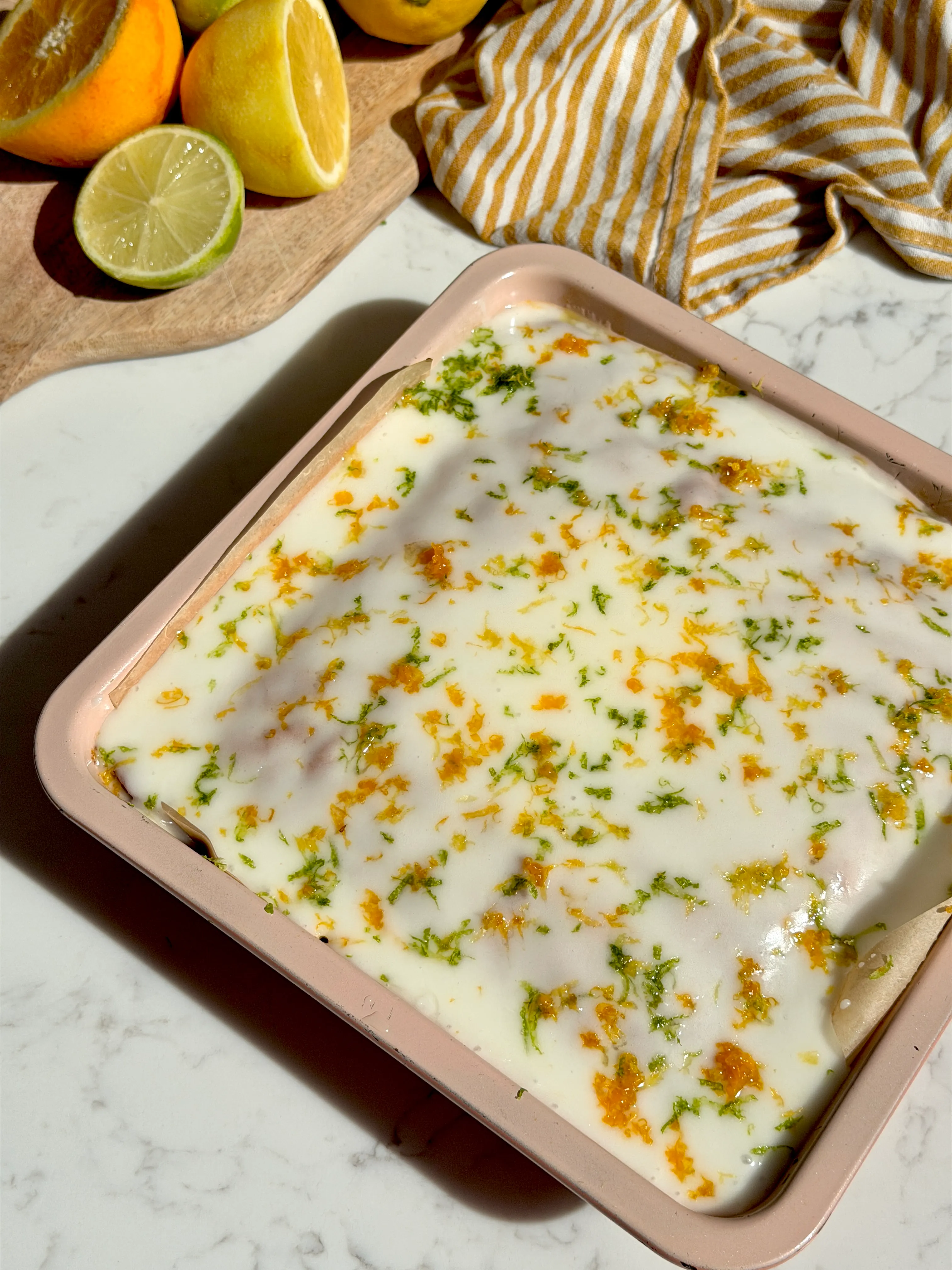
- Once the cake has almost cooled, pour the icing on top. Top with sprinkles, or extra citrus zest. Cut into 9 slices and serve with warm custard!
Like this recipe?
If you like this recipe, you'll love my cookbook! Full of delicious meals for all types of occasions, there's something for everyone


Meal Plans & More...
Subscribe to my newsletter for weekly meal plans, for one! I select 5 one pot one portion recipes that use similar ingredients and include your shopping list plus recipe notes, ingredient swaps and tips and tricks for using up leftovers. Take a look at the first one here...
Ginger Chicken Rice Bowl
Usually I would consider a brothy meal that you eat with a bowl and a spoon a form of comfort food, however, the flavours in this dish are so fresh and vibrant that it has to go in this chapter. I love the fiery freshness of ginger and it’s the predominant flavour in this rich chicken broth. The finished dish isn’t a soup as such, but there is just enough broth to make every mouthful deliciously juicy. It also takes minimal time to make so it’s a useful recipe to have on hand for days when you’re short of time.

Curried Chicken Skewers with Satay Slaw
I have an affinity for crunchy slaws, as I think they provide more interest, more texture and are more filling than many other salads. However, I’m not partial to excessive quantities of mayonnaise. Here I opt for coconut milk instead, which delivers the same creaminess in a less monotonous way. The fresh coriander and bite of roasted peanuts keep this slaw lively and interesting and are perfect with the lightly charred curried chicken skewers. This would also be great sandwiched between a burger bun, or on a soft flatbread.

Creamy Green Linguine
In a way, this linguine changed my life. It was the first recipe in the series to take off on social media, bringing new people and new opportunities into my life. It’s an exceptionally simple recipe that uses the same water to cook both the pasta and the vegetables, which you then use to create a velvety, carbonara-esque sauce with the cheese and egg. I’ve retested this and tweaked it since its original conception and, though I can’t promise it will change your life, I can promise it will be delicious.

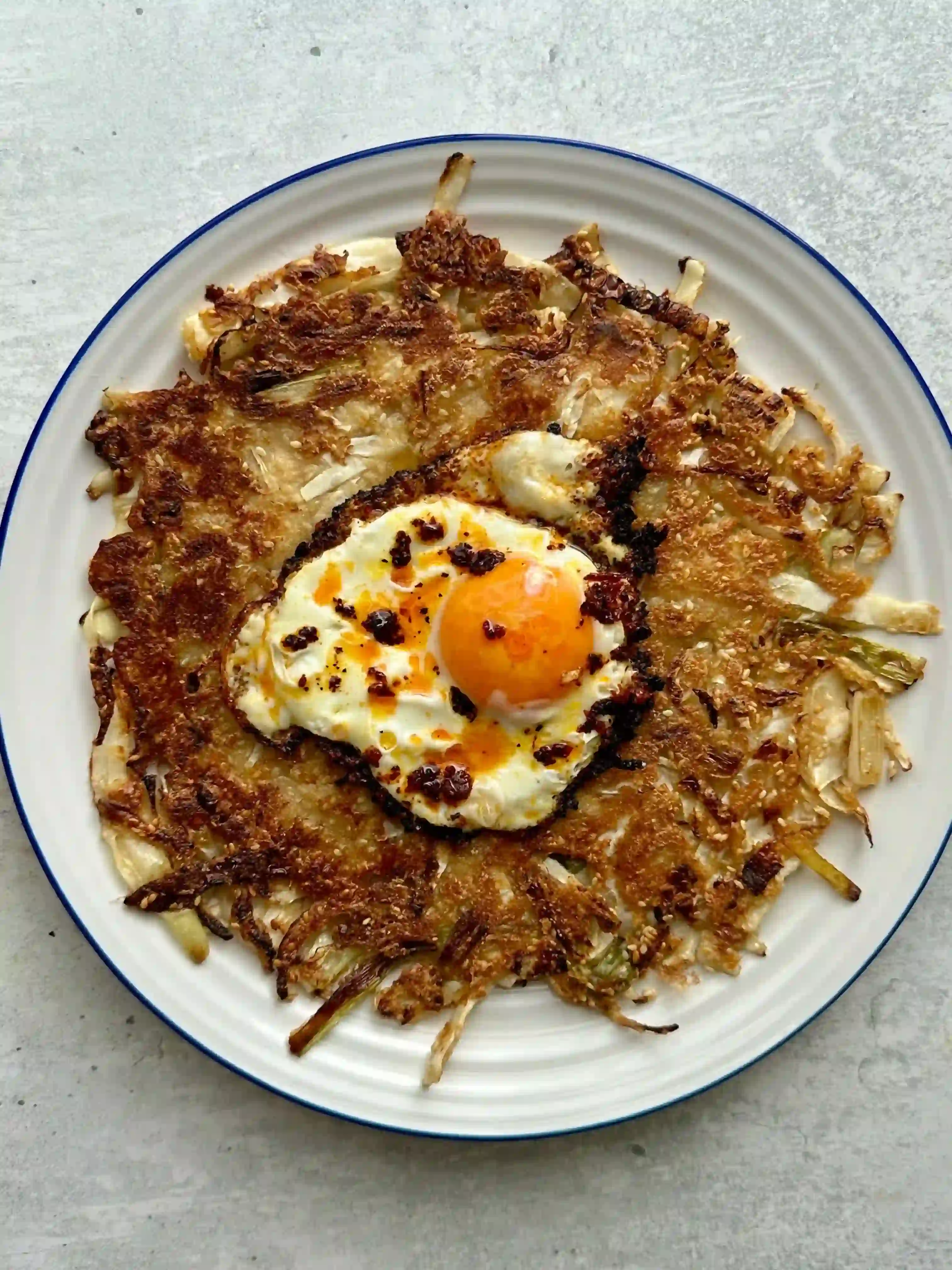
Vegetable Pancake with a Chilli Crisp Egg
This vegetable pancake has its origin in Korea (where they’re known as yachaejeon) and is the perfect dish to use up odds and ends of any vegetables you have lying around. Cabbage, spring onions, carrots and courgettes work really well and provide a nice balance of moisture and crunch, but peppers, potatoes, mushrooms or leafy greens are good alternatives. Depending on the vegetables you use, you may need more or less water to make the light batter so adjust as necessary.
Prawn & Mango Salad
The perfect fresh, but still flavourful, summer salad! This is a beautiful fragrant salad with a creamy, zingy coconut milk dressing. With just a little bit of chopping and a minute of whisking, you’ve got a gorgeous summer lunch, perfect for working from home, taking lunch to the office or a sunny meal in the garden this weekend.

Some big praise!
Take a look at what some of my happy customers have to say about "One Pot, One Portion"!
"One Pot One Portion is, to borrow from The Parent Trap “a brilliant beyond brilliant idea”…I know many feel that it’s too much bother to cook ‘just’ for themselves — a sad admission, I feel — and to those people, and many others besides, I say: get this book and prove yourself liberatingly wrong!…Thank goodness for books! And thank goodness for Eleanor Wilkinson, a young talent to lift the spirits…There are so many people who could benefit from this book…this book is a boon and a blessing"

"A genius approach to bringing joy to every meal, Eleanor gets that good food is the best form of self-love."

I buy a lot of cook books and this is genuinely one of the best l've ever bought. I've tried 6 or 7 recipes so far and they're all winners. I'm well used to scaling recipes down to one portion, but not having to calculate measurements as l go along feels like a little luxury. One of the best things about the book is that all the recipes are actually cooked in one pot - in a lot of other so-called books you still have to make your side dish in a separate pot. With these recipes, even if they include rice or pasta, it's all cooked together. No mountains of washing up! Highly recommended.

I have been following Eleanor on IG for a while and have made several of her dishes before the cookbook came out. I was thrilled to see so many new things to try and have already made about 6 of them. Her recipes are approachable, the dishes are delicious, and they make me feel like I can cook! Highly recommend.
If you love eating good home cooked food but can't be bothered to cook just for yourself, then this is the book for you. Using ingredients that are easy to find, then mixing, cooking and eating from the same pan or dish means a minimum of washing up. Every recipe I have tried so far has been delicious and have all turned out well which isn't always the case with many cookery books. Definitely recommend!
Following Eleanor on Instagram and seeing her recipes come to life is one thing but then having them in my own kitchen is quite another. Not only are the recipes easy to follow and delicious she also help you not to waste food. This book is like having all your favourite foods in one place with the added bonus of an old friend showing you the ropes. Congratulations Eleanor when can I pre-order the next one?
Bought this for my sister who cooks for one. She absolutely loved it finding it inspiring! So many great recipes to motivate and keep you cooking when it's just you eating!
Follow Eleanor on socials and knew I NEEDED this book immediately! SO glad I paid extra and had it shipped from the UK (to US). Eleanor's voice is loud and clear in every recipe. The pictures are beautiful, the instructions are perfectly clear, and I want to make EVERYTHING. I cannot recommend this book enough!
This is perfect, as far as influencer chefs go, I find this book refreshing in what has become a cohort of lauded influencers who really aren't doing much more than the bog standard meals most people make anyway, or making googled recipes and adding their own "flair". This book is different as it's your normal fare you'd likely make yourself, given a little bit of a twist to speed up the process / use less utensils / ingredients / food waste, in really creative and tasty ways, all perfectly portioned for one.
Great present! Bought this for my sister who cooks for one. She absolutely loved it finding it inspiring! So many great recipes to motivate and keep you cooking when it's just you eating!
Great present! Bought this for my sister who cooks for one. She absolutely loved it finding it inspiring! So many great recipes to motivate and keep you cooking when it's just you
Follow Eleanor on socials and knew I NEEDED this book immediately! SO glad I paid extra and had it shipped from the UK (to US). Eleanor's voice is loud and clear in every recipe. The pictures are beautiful, the instructions are perfectly clear, and I want to make EVERYTHING. I cannot recommend this book enough!
This recipe book is stunning and fulfils its role brilliantly in catering for individuals who want to eat delicious meals, but don't want to prepare family sized portions or devote their entire evening to cooking. Who'd believe you could make an entire roast for one person and only use one pan in the process! She is a genius and I couldn't recommend this book any more highly.
One of the best things about the book is that all the recipes are actually cooked in one pot - in a lot of other so-called books you still have to make your side dish in a separate pot. With these recipes, even if they include rice or pasta, it's all cooked together. No mountains of washing up!
This is the book I've been waiting for! I (very happily!) live alone, love to cook and read cookery books, but every recipe is for two people or more. This gorgeous book contains recipes perfectly proportioned for one person (and I'm always a very hungry one person!) which ensures more variety, less food waste, and pure, gluttonous joy.
It's so nice to finally have a recipe book that I can go to if I want a quick easy meal with minimal cleaning up required! Everything l've tried so far is delicious. And I salivate at the thought of everything in there!
Totally reignited my cooking mojo which had been MIA for a while. I'm going to buy my daughter a copy to take back to Uni too as everything is simple and delicious - perfect for a student!
Best cookbook for somebody single!
The fact I know I won't have loads to wash up really feels motivating and l've earmarked so many of the recipes already.
This book is like having all your favourite foods in one place with the added bonus of an old friend showing you the ropes. Congratulations Eleanor when can I pre-order the next one?